A History of the Israel-Palestine Struggle
 eigo1147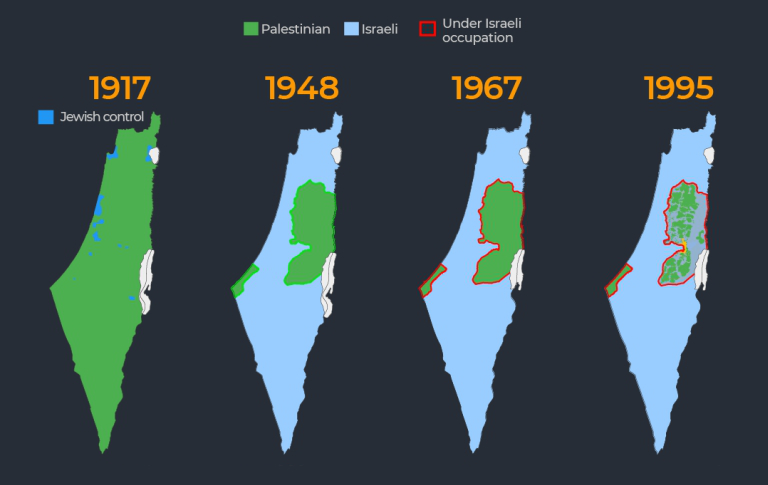
Israel and Palestine continue to fight because both sides claim the same land as their homeland.
The conflict is rooted in a long and painful history involving religion, identity, and displacement.
Historically, Jewish people lived in this region, called Palestine, thousands of years ago but were later forced to leave.
For many centuries after that, Arab communities lived in the region.
In the late 19th and early 20th centuries, Jewish immigrants began returning to the land, hoping to rebuild a homeland (Zionism).
This created tension with the Arab population already living there.
After World War II, the United Nations proposed dividing the land into two states—one for Jews (Israel) and one for Arabs (Palestine).
Jewish leaders accepted the plan, but Arab leaders rejected it, believing it was unfair.
When Israel declared independence in 1948, surrounding Arab nations attacked Israel.
Many Palestinians were displaced and became refugees.
Since then, the region has experienced multiple wars, uprisings, and ongoing violence.
In 1967, Israel captured more territory, including the West Bank and Gaza Strip.
Today, many Palestinians live under difficult conditions and continue to seek their own independent state.
There are also major disagreements over Jerusalem, a city considered sacred by both Jews and Muslims.
The expansion of Israeli settlements in the West Bank further complicate a peaceful resolution of the conflict.
In summary, Israel and Palestine remain in conflict due to historical grievances, territorial disputes, and a lack of trust.
Although many efforts have been made to bring peace, a long-term solution still hasn't been found.
※この文章は英語学習用です。This article is for English learning purposes.